
Sleep Apnea Treatment – Sycamore, IL
Staying On Top of Your Health and Wellbeing
You may be wondering how snoring can be bad. The reality is snoring can indicate that a sleep breathing disorder is present. Recognized as one of the most common health problems in the United States, sleep apnea may be present if loud snoring occurs. The good news is the dentists at Grand Dental – Sycamore have special training to recognize these concerns and provide long-lasting sleep apnea treatment for Sycamore, IL dental patients.
Why Choose Grand Dental - Sycamore for Sleep Apnea Treatment?
- Lower Your Risk for Systemic Illnesses
- Receive Comfortable, Customized Oral Appliances
- Start Feeling Well-Rested Again
Why Sleep Apnea is so Dangerous
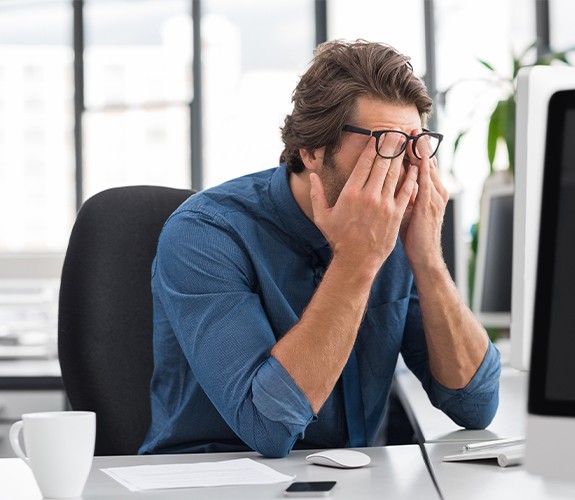
Sleep apnea disrupts your sleep cycle and breathing. In fact, apnea literally means “without breath,” which is why it’s not the same as snoring. As snoring stops, it’s likely that breathing has stopped as well. In response, the body jolts you awake, despite the fact you are not even aware that you’ve woken up. This constant cycle of sleeping and waking hundreds of times a night is precisely what leaves you tired the next morning.
This is why another common symptom of sleep apnea is chronic fatigue. However, did you know symptoms like these can put yourself and even others in harm’s way, especially if you drive a vehicle regularly? In fact, those who are sleep-deprived are even more likely to cause an accident than a drunk driver!
Of course, chronic fatigue isn’t the only issue. Sleep apnea is also linked to:
- High blood pressure
- Strokes
- Irregular heartbeat
- Heart attacks
- Heart failure
- Worsened ADHD and depression
The Symptoms of Sleep Apnea
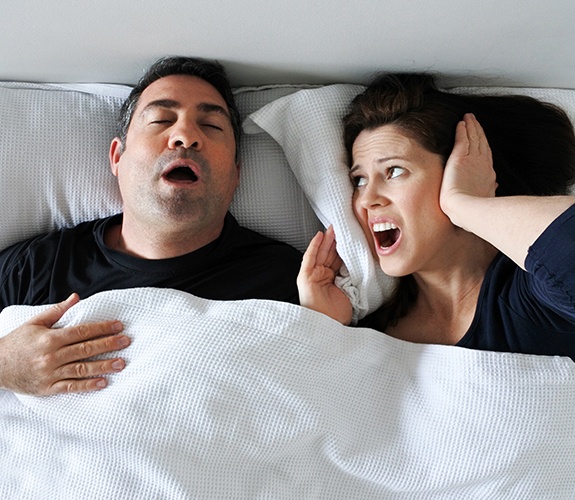
The most common symptom is snoring, however, there are other signs to keep in mind, including:
- Chronic daytime fatigue or sleepiness
- Dry mouth
- Sore throat
- Insomnia
- Short-term memory loss
- Nighttime restlessness
- Difficultly concentrating or remembering information
Are you experiencing these symptoms? Have a partner who is? Call us!
How We Can Help
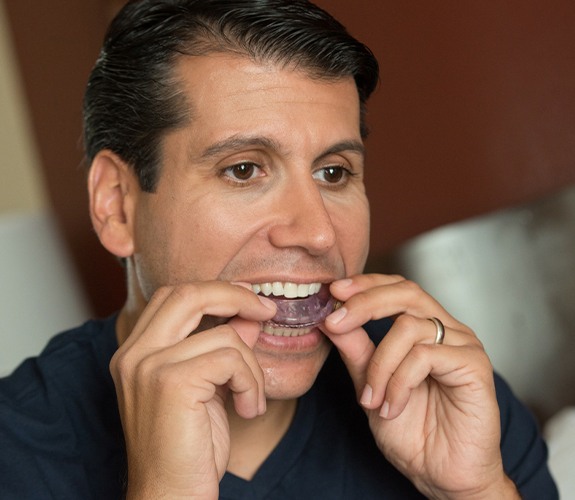
We’ll partner you with a primary physician so a sleep study can be completed. From there, we generally prescribe a CPAP (continuous positive airway pressure) machine. This ensures your air passages stay open through the night. If this device becomes too difficult to use, we can also provide you with custom-made oral appliances that works similar to a nightguard. This device keeps the mouth and throat in a position conducive to sleep.
Sleep Apnea FAQs
Can I diagnose sleep apnea on my own?
Many devices on the market claim they can determine if you have sleep apnea or not. It’s best not to solely rely on these products, but instead, allow a qualified professional to provide a formal diagnosis. While many symptoms align with sleep apnea, they don’t necessarily mean that you have this common condition.
Only a sleep study will determine if you have sleep apnea. The close monitoring and analysis of your breathing habits, heart rate, and sleep patterns will indicate whether you need to seek treatment.
How long are apnea events or episodes?
Every person is different, but the average apnea episode can last between 10 seconds and two minutes. This can happen between five and 30 times each hour. When analyzing a sleep test, a physician will determine how many episodes you experience throughout the night, based on each hour. If you have 0-15 apnea events per hour, it is considered mild. If you have 30 or more per hour, it is considered severe.
What does sleep apnea look like for women?
Men are more likely to suffer from snoring and chronic daytime fatigue, but women may exhibit symptoms of insomnia, depression, anxiety, and more. Also, women who are pregnant, menopausal, or overweight or obese are at a higher risk of developing obstructive sleep apnea (OSA).
How can I travel with sleep apnea?
Patients who have a CPAP (continuous positive airway pressure) device find it difficult to travel with sleep apnea. This bulky machinery can be cumbersome to maneuver, especially if planning to fly on a plane. However, an oral appliance is a more user-friendly solution. Small and portable, it can be carried in a purse or bag and easily used while in a car or on a plane.
No matter how you plan to get from one place to another, make sure you maintain a normal sleep schedule so that you don’t experience interruptions throughout the night.